
Workplace slip and fall accidents can happen quickly, but determining why they occurred and who may be responsible often requires a detailed review. A wet floor, uneven surface, loose material, poor lighting, or another hazard may contribute to an employee’s injury. After an accident, the circumstances surrounding the fall can become important when evaluating a potential legal claim.
Slip and fall attorneys examine workplace accidents from multiple angles to understand how the incident occurred, whether a dangerous condition was present, and how the injury has affected the worker. Their analysis may involve reviewing physical evidence, workplace documentation, witness accounts, medical records, and other information related to the accident.
A thorough investigation can help establish a clearer picture of events and identify issues that may otherwise be overlooked.
Examining How and Why the Accident Happened
One of the first steps in analyzing a workplace accident is reconstructing what happened before, during, and immediately after the fall. An attorney may consider where the accident occurred, what the employee was doing at the time, and whether the area contained a condition that increased the risk of falling. Details such as spills, damaged flooring, cluttered walkways, unsecured mats, or inadequate illumination may all be relevant to the analysis.
The timing of the hazardous condition can also matter. For example, an investigation may focus on whether a spill had existed long enough for someone to discover and address it. Workplace cleaning schedules, inspection records, maintenance reports, and internal communications could provide information about how the area was monitored and whether the condition had been reported before the accident.
Attorneys may also review photographs, surveillance footage, accident reports, and witness statements. These materials can
help preserve details that become more difficult to verify as time passes. Video footage may show the condition of the walking surface, while photographs taken soon after the accident may document visible hazards or the surrounding environment.
Evaluating Responsibility and Workplace Conditions
After examining how the fall occurred, slip and fall attorneys may analyze who controlled the location where the accident happened. Responsibility can depend on the specific workplace arrangement. The employer may own and maintain the property, or another business, landlord, contractor, or property manager may have responsibility for certain areas.
This analysis often includes reviewing maintenance obligations and safety procedures. Attorneys may examine whether the responsible party had procedures for identifying hazards, responding to spills, repairing damaged surfaces, or warning workers about unsafe conditions. The existence of a policy alone may not answer
every question, since the circumstances can also depend on whether applicable procedures were followed.
The worker’s actions may also be considered as part of the overall investigation. For instance, the available evidence may address whether warning signs were present, whether the hazard was open and obvious, or whether workplace conditions limited the employee’s ability to recognize a danger. These issues can vary significantly based on the location, lighting, work requirements, and other facts surrounding the incident.
Assessing Injuries and Their Effects
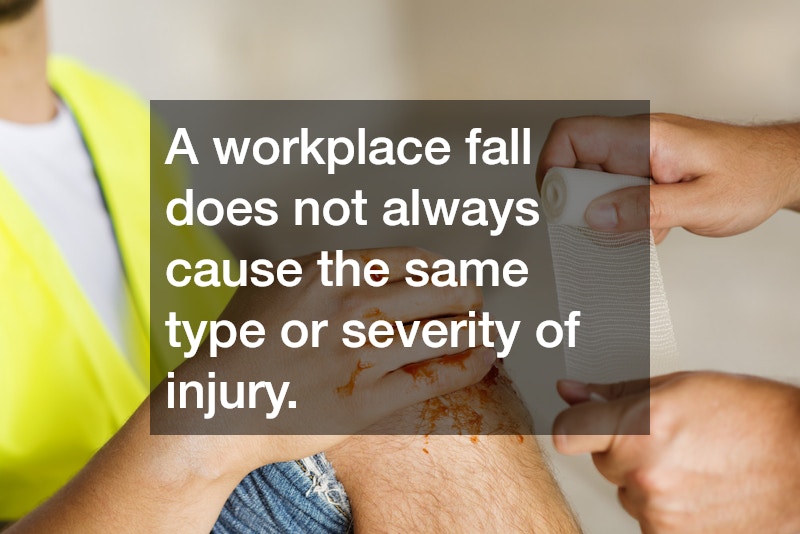
A workplace fall does not always cause the same type or severity of injury. Some people experience fractures, sprains, back injuries, head injuries, or soft tissue damage, while others may initially believe they are unhurt and later develop symptoms. For this reason, an analysis of the incident may include medical records documenting the diagnosis, treatment, and progression of the injury.
Attorneys may review emergency care records, physician notes, diagnostic imaging, physical therapy documentation, and recommendations for future treatment. These records can help establish the nature of the injury and provide a timeline connecting medical care to the accident. Consistent documentation may also help clarify how
symptoms have changed since the fall.
The financial and practical effects of an injury can also be part of the evaluation. Depending on the circumstances, an attorney may consider missed work, reduced earning capacity, medical expenses, rehabilitation needs, and limitations affecting daily activities. The impact can differ considerably between someone who returns to work quickly and someone whose injuries require ongoing care or prevent them from performing their usual job duties.
A workplace slip and fall case involves more than identifying the moment someone lost their footing. A careful analysis considers the hazardous condition, the parties responsible for the area, the available evidence, and the full effects of the injury. By investigating each of these elements, slip and fall attorneys can develop a more complete understanding of the accident and the legal issues that may follow.